Tibetan Bracelet Guide for First-Time Buyers
For a first-time buyer, a Tibetan bracelet collection can be dizzying: red cords, dark bodhi seeds, copper cuffs crowded with tiny lettering, and deep blue-green stones. They share Himalayan roots, yet they differ enormously in construction, in how they feel against the skin, and in the daily routines they suit.
Unlike a singing bowl that sits in a meditation corner or a necklace that rests on the chest, a bracelet travels with your hands. It brushes the desk when you type, catches the light when you reach, and is easy to touch when your mind wanders. This guide breaks a Tibetan bracelet into its parts, decodes the symbols and materials, and covers wearing customs, stacking, and care, so you can choose the one that fits your day.
Explore the sections below to navigate your first Tibetan bracelet purchase:
- Deconstructing the Bracelet: Beads, Spacers, and Knots
- Sacred Symbols That Travel on Your Wrist
- From Bodhi Seeds to Turquoise, the Materials Worth Knowing
- Matching the Four Style Families to Your Daily Routine
- The Left-Wrist Custom and the Role of Monastic Blessings
- The Art of Stacking: Combining Intentions and Aesthetics
- Essential Care for Organic Beads and Solid Metals
- Conclusion: Choose the Companion That Fits Your Daily Rhythm
- FAQs
Deconstructing the Bracelet: Beads, Spacers, and Knots
Most product listings assume you already know the vocabulary. Three parts explain almost every design you'll come across.
The main beads and the guru bead
Beads make up the body of the Tibetan bracelet. On a wrist mala, which usually holds 18 or 27 beads, one bead differs from the rest. This is the guru bead, often a larger bead or sometimes a three-hole bead. It marks where a round of counting begins and ends, and it gives your fingertip a fixed landmark when you turn the strand.
Spacers and counter rings
Metal rings or small contrasting beads sit between the main beads. They look decorative, but they also work as touch cues. Your thumb feels the change in texture, so you can find your place by feel in a meeting or on a commute without ever looking down.
Cord and knots
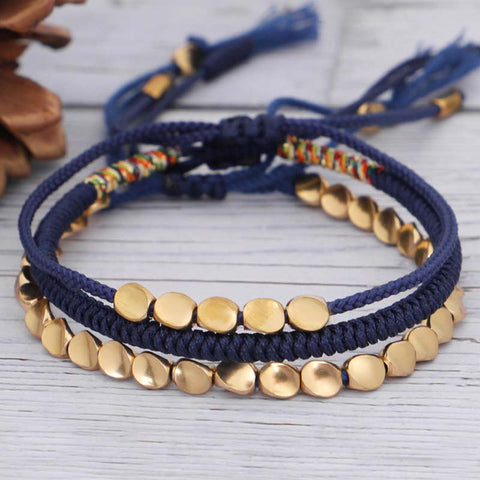
Elastic cord slips on and off easily, but it stretches over time. Traditional woven or knotted cord holds its shape longer, and a sliding knot lets you adjust the fit by a few millimeters as your wrist changes through the day or the seasons. A red string Tibetan bracelet is often just a cord with a hand-tied knot, leaving very little that can fail.
Sacred Symbols That Travel on Your Wrist
A Tibetan bracelet moves as you move, and that changes how its symbols work. Instead of hanging on a wall, they turn through your day.
Om Mani Padme Hum
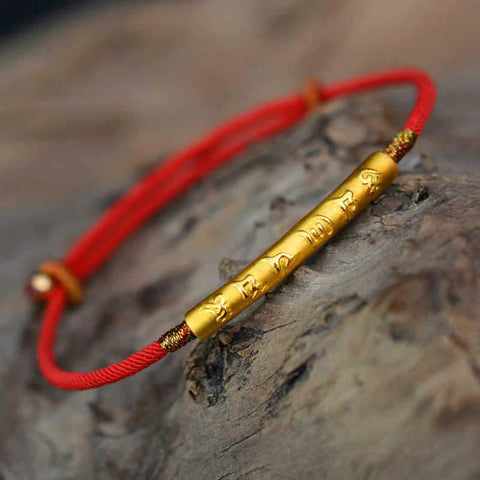
Engraved on a band or bead, the six-syllable mantra of compassion rotates around your wrist as you type, wave, or reach for a cup of coffee. Every glance at the letters is a small prompt to slow down and refocus. When your fingers find the engraving, the mantra becomes something you can feel as well as read, which is why many wearers describe it as a tactile anchor.
The Endless Knot
A pattern of interlaced lines with no beginning or end, the Endless Knot shows up on Tibetan bracelets as a charm or a carved panel on a metal cuff. Because the band itself is a closed loop, the symbol suits a wristband naturally — and for a first-time buyer, its most useful meaning is simple: the endless cycle of cause and effect, a reminder that every action carries a consequence.
The Vajra
Also called the dorje, the vajra appears as a small metal charm or a clasp. It represents unshakable strength, and wearers often choose it as a steadying reminder before a stressful meeting or a demanding shift.
From Bodhi Seeds to Turquoise, the Materials Worth Knowing
The natural materials chosen for a Tibetan bracelet dictate not only its visual aesthetic but also its weight, texture, and how it ages over years of continuous wear. Understanding material properties helps you choose a piece that aligns with your sensory preferences and daily active environment.
Organic materials: bodhi seeds and yak bone
Bodhi seeds, including the popular phoenix-eye type, and yak bone start out matte and slightly rough. Skin oils gradually polish them, deepening the color and adding a soft sheen known as patina. Over months, the bracelet takes on the character of its wearer, which is why many owners treasure a well-worn strand more than a brand-new one.
Highland stones: turquoise and lapis lazuli
Turquoise, the sky stone, is traditionally carried for protection on journeys, and its soft blue-green contrasts beautifully with silver and copper. Lapis lazuli is a deep blue flecked with gold, linked to clarity and reasoned thought. Both are relatively soft, so scratches show, and both can be marked by oils and chemicals. Pair either with warm metal or dark seeds for strong contrast.
Metals: red copper and silver
Red copper warms quickly to body temperature and slowly darkens with oxidation, and in humid weather it can leave a faint greenish mark on the skin. Silver, or the silver-toned alloy sold as Tibetan silver, adds a cooler, brighter contrast and tarnishes more slowly. Check the listing for the exact metal, since the two behave and are priced differently.
Matching the Four Style Families to Your Daily Routine
First-time buyers often struggle to choose among the wide variety of designs available online. To narrow your selection, consider how a Tibetan bracelet will interact with your daily movements, dress code, and physical tasks.
Hand-Knotted Red Protection Cords
Ultra-lightweight and understated, these braided cord bracelets sit flat against the skin. They are nearly indestructible, highly water-resistant, and ideal for individuals who want an uninterrupted mindfulness anchor that remains comfortable during workouts, sleeping, or working under strict professional dress codes.
Beaded Wrist Malas
Strung with 18, 21, or 27 beads (divisors of the traditional 108-bead prayer mala), these bracelets are designed for tactile engagement. If you tend to fidget, feel stressed at a computer desk, or practice breathwork, rolling these smooth 6mm to 8mm beads between your fingers provides an immediate physical outlet for tension.
Engraved Metal Cuffs
Forged from thick copper, brass, or sterling silver, rigid open cuffs offer a classic, substantial feel on the wrist. They do not require cord restringing over time and feature intricate filigree or stamped mantras that hold up exceptionally well to daily bumps and activity.
Antique-Style Patinated Bracelets
Utilizing specialized oxidation techniques that darken recessed engravings, these pieces showcase a time-worn, heritage appearance right out of the box, combining historic visual charm with modern durability.
The Left-Wrist Custom and the Role of Monastic Blessings
Why the left wrist
Traditionally, a Tibetan bracelet is worn on the left wrist, which many Eastern spiritual traditions treat as the receiving side of the body — the side where a piece's intentions are most readily taken in. There is a practical logic too, and for most buyers it matters just as much: the right hand stays free for writing, typing, and eating, and it can also move the beads of a wrist mala.
Why people seek a blessing
Many buyers also look for bracelets blessed by Tibetan monks during a chanting ceremony, valuing the blessing as part of the piece's protective character. It is a matter of faith and tradition rather than something a product can prove, so if it matters to you, ask the seller who performed the blessing and how it was done — a genuine blessing usually comes with a clear answer about the ceremony, the monk involved, and where it took place.
The Art of Stacking: Combining Intentions and Aesthetics
Unlike bulky necklaces that easily tangle or delicate rings that restrict knuckle movement, Tibetan bracelets offer an ideal surface area for intentional stacking. Combining different Tibetan wrist styles allows you to layer complementary physical textures while grouping distinct personal intentions on a single wrist.
When building a three-piece stack, follow a balanced layering structure:
- The Base Layer (Protection & Simplicity): Start close to your wrist joint with a thin, hand-knotted red cord. This provides a lightweight anchor symbolizing safety, vitality, and grounded boundaries.
- The Core Layer (Focus & Emotion): Position a 6mm or 8mm stone or seed wrist mala directly above the cord. Choose a central material that aligns with your mental focus for the day—such as blue Lapis Lazuli for mental clarity or smooth Bodhi seeds for mindfulness practice.
- The Accent Layer (Strength & Structure): Finish the stack with a slender, engraved copper or sterling silver cuff. The polished metallic sheen adds structural weight and visual distinction, anchoring the stack with the unshakeable energy of the Vajra or inscribed mantra.
To maintain physical comfort while typing or executing daily tasks, ensure that your total stack length does not exceed 1.5 inches (3.8 cm) along your forearm, and keep the heaviest metal pieces positioned comfortably above the wrist bone.
Essential Care: Maintaining Organic Beads and Solid Metals
A high-quality Tibetan bracelet is built for longevity, but combining organic seeds, porous gemstones, and reactive metals requires material-specific care. Establishing simple maintenance habits ensures your bracelet retains its structural integrity and develops a beautiful patina over time.
- Organic Seeds and Yak Bone: Natural Bodhi seeds and carved bone are highly sensitive to moisture changes. Never submerge organic beads in water or wear them while showering, swimming, or washing dishes, as excess water causes natural fibers to swell, warp, or crack. If your beads become dry, gently rub a single drop of natural jojoba or coconut oil onto your palm and massage the beads to preserve their lustre.
- Porous Gemstones (Turquoise and Lapis Lazuli): Natural highland stones are porous and can absorb harsh synthetic liquids. Keep your stone bracelets away from household cleaning chemicals, perfumes, hairsprays, and alcohol-based hand sanitizers. Clean stone beads using a slightly damp micro-fiber cloth and wipe dry immediately.
- Solid Copper, Brass, and Silver: Solid metal cuffs and charms oxidize naturally over time when exposed to oxygen and skin humidity. If you prefer a bright, polished finish rather than an antiqued patina, polish solid metals using a dedicated silver cloth or a mild paste made from lemon juice and baking soda, rinsing thoroughly with clean water afterwards.
- Hand-Knotted Cords: Braided nylon thread can be washed gently with cold water and mild soap to remove daily sweat. Allow corded bracelets to air-dry completely on a flat towel away from direct, high heat sources.
Conclusion: Choose the Companion That Fits Your Daily Rhythm
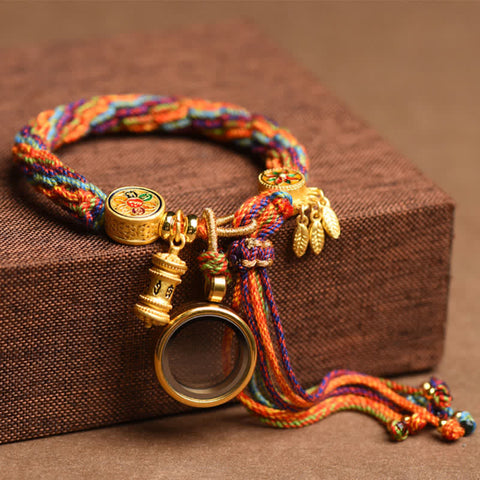
Selecting your first Tibetan bracelet is a deeply personal journey that merges physical craftsmanship, material aesthetics, and daily intentionality. Rather than searching for the most elaborate or costly piece, focus on choosing a design that integrates seamlessly with your active routine. Whether you are drawn to the weightless simplicity of a hand-knotted red cord, the grounding touch of a natural Bodhi seed wrist mala, or the metallic radiance of an engraved copper cuff, the right bracelet will serve as an effortless, daily companion—reminding you to stay present, balanced, and mindful with every movement of your hand.
FAQs
Can I wear my Tibetan bracelet while showering or swimming?
It depends on the materials. While synthetic hand-knotted red cords and solid metal cuffs tolerate water well, bracelets crafted with organic Bodhi seeds, Yak bone, or porous stones like turquoise should strictly avoid water to prevent cracking, swelling, or permanent discoloration.
How do I measure my wrist to ensure the right Tibetan bracelet size?
Wrap a flexible measuring tape directly below your wrist bone. Note the exact measurement and add 0.5 inches (1.3 cm) for a standard, comfortable fit. For beaded wrist malas featuring 8mm or larger beads, add 0.75 inches (1.9 cm) to account for bead thickness.
What should I do if my hand-knotted Tibetan red string breaks?
In traditional Himalayan culture, a naturally broken cord signifies that the bracelet has absorbed negative energy or completed its protective cycle for you. Respectfully return the broken threads to nature or burn them, and replace the bracelet with a renewed personal intention.
Is it acceptable to stack multiple Tibetan bracelets on the same wrist?
Yes, stacking is widely practiced. You can comfortably pair a slim knotted red cord with a stone wrist mala or a metal cuff on your left wrist. Just ensure the combination feels balanced and does not restrict movement during daily typing or active tasks.