Pre-Purchase Amethyst Guide: Evaluating Color Zoning, Light Return & Cut Angles Before You Shop
Inside This Amethyst Jewelry Buying Guide:
- Pre-Purchase Motivation: Why Choose Amethyst over Other Gems?
- Matching Amethyst to Life Situations & Emotional States
- Evaluating Amethyst Jewelry by Category: Key Inspection Criteria
- Advanced Gemologist Inspection: Light, Cut & Authenticity
- Gift Pre-Purchase Guide: Recipient Profile Matching
- 30-Second Pre-Purchase Self-Check
- Metals, Styling & Essential Maintenance
- Conclusion: Securing the Perfect Gift
Navigating the vibrant market for natural gemstones can be overwhelming, especially when online sales and promotions spark impulse buys. This guide cuts through generic marketing talk to give you practical, jeweler-tested criteria for evaluating amethyst before making a purchase. You’ll learn how to judge color zoning, check structural integrity, match metals, and choose the right design parameters for your budget—without getting trapped by misleading product listings.
Pre-Purchase Motivation: Why Choose Amethyst over Other Gems?
Amethyst is the royal purple variety of the quartz family (Mohs hardness 7), revered across eras for its vivid hues. While ancient lore connected it to sobriety and inner focus, modern buyers value it primarily for its rich color intensity and everyday durability.
When inspecting prospective pieces, your primary focus should always be on gem quality, cut precision, and setting craftsmanship, rather than marketing slogans.
Matching Amethyst to Life Situations & Emotional States
Gifting amethyst jewelry is more than choosing a gemstone—it is matching its physical traits and symbolic calm to the recipient's life stage. This pre-purchase guide helps you select the right cut, tone, and setting based on the recipient's emotional state, daily routine, and personal circumstance before you hit "buy."
Evaluating Amethyst Jewelry by Category: Key Inspection Criteria
Different types of jewelry require entirely different physical and budgetary evaluations before you click "buy." Here is how to assess each style using unique criteria:
Amethyst Rings: Navigating Price & Color Saturation
When shopping for an amethyst ring, price is heavily dictated by color tone and uniformity. Top-tier natural amethysts exhibit a deep reddish-purple or royal violet hue (often termed "Siberian quality"), which commands a premium. Lighter lavender or pale lilac stones are far more affordable and suit delicate, understated designs. Keep in mind that deep-colored ring stones will show scratches on their focal surface over years of heavy hand activity, so check if the metal basket adequately protects the stone's edges.
Amethyst Necklaces: Getting the Size & Visual Proportion Right
For pendants and necklaces, the key constraint is stone size relative to your neckline and chain thickness. Because quartz can grow in massive clean crystals, large-carat amethyst pendants are common—but a massive 15-carat stone can flip or strain a light chain. Ensure the product listing specifies both the millimeter dimensions of the gem and the thickness of the chain. A 10mm to 12mm center stone usually offers the ideal balance of visual presence without twisting on the collarbone.
Amethyst Bracelets: Weight Balance & Bead Uniformity
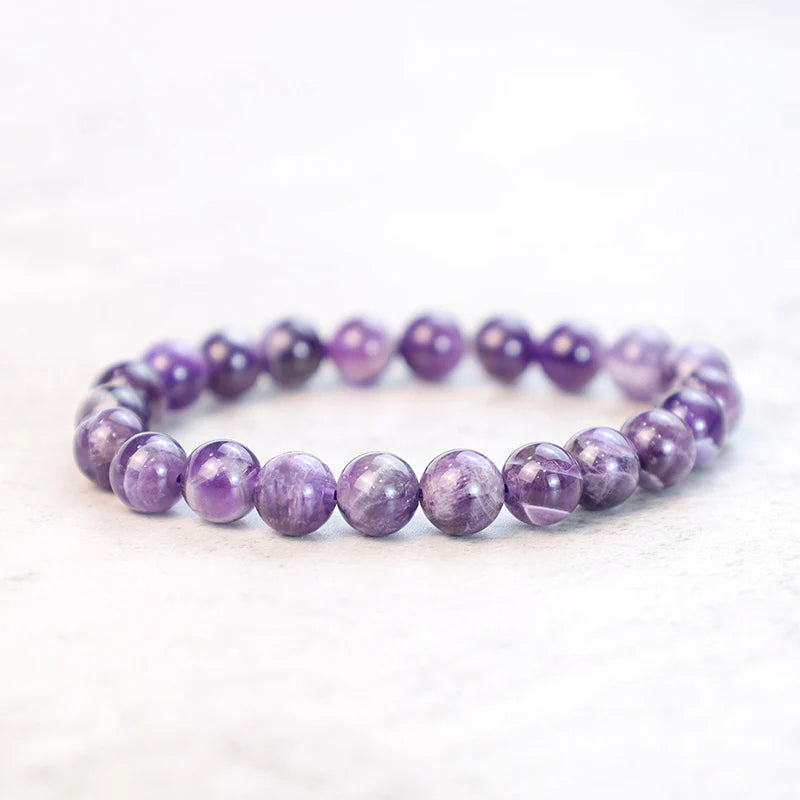
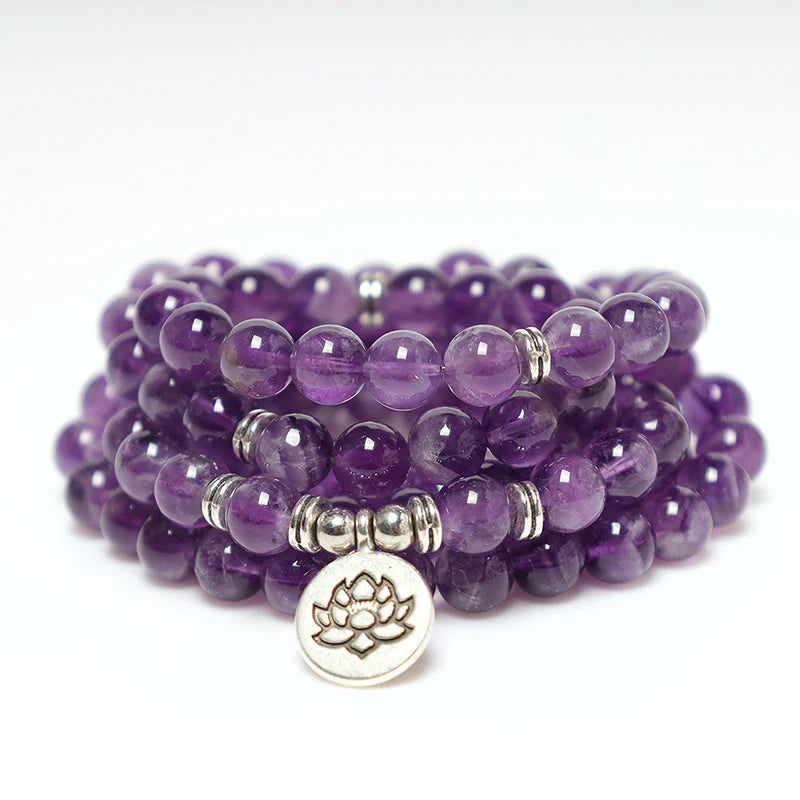
When purchasing bead or link bracelets, focus on total wrist weight and strand balance. Natural amethyst has a high relative density; a multi-strand 10mm bead bracelet can feel noticeably heavy for daily desk work. Look for listings that detail total bracelet weight (aim for under 35 grams for high comfort) and verify that bead color and clarity are consistent throughout the entire circle, rather than faded near the clasp.
Amethyst Earrings: Long-Term Durability & Sunlight Exposure
Amethyst studs and drop earrings sit close to your face, exposing them to hairsprays, perfumes, and direct sunlight. Since prolonged exposure to strong UV light can gradually fade certain purple stones over decades, look for earring settings that allow easy access for gentle cleaning. Furthermore, verify that the push-backs or lever-backs are made of solid hypoallergenic metals (such as Sterling Silver or Gold) to prevent skin irritation during extended wear.
Advanced Gemologist Inspection: Light, Cut & Authenticity
When shopping online, look out for these advanced physical markers to ensure you are paying for true optical value:
- The "Two-Lighting" Color Stability Check When browsing amethyst jewelry photos, observe how the stone looks under different illumination. High-quality natural amethyst exhibits slight dichroism—showing a richer reddish-purple under warm incandescent lighting and a cool violet under natural daylight. If a listing only shows photos under harsh, blue studio lighting, the gem may appear significantly duller when worn in real life.
- Beware of "Windowing" and "Extinction" Amethyst is a quartz, meaning it requires precise pavilion angles (around 43 degrees) to reflect light efficiently back to your eye:
- Windowing (Too Shallow): If you can easily read text or see your finger through the center of the faceted stone, the cut is too shallow, resulting in a washed-out appearance.
- Extinction (Too Deep): If large areas of the gemstone remain dark or black when tilted, the gem was cut too deep, suffocating its natural sparkle.
- Identifying Heat-Treated & Dyed Stones Watch out for unnatural color traps. If color heavily concentrates along small internal fractures, the stone may have been fracture-dyed. Additionally, if a purple gem displays burnt yellowish or brownish patches on its edges, it might have undergone unstable heat treatment.
- Checking the Setting's Light Return (Open Back vs. Closed Back) When choosing amethyst jewelry as a gift, closely examine the underside of the metal setting:
- Open-Back Settings: Always prioritize designs with open or latticed metal backings. Natural amethyst relies heavily on ambient light entering from both top and bottom to reveal its full color brilliance and purple-red flashes.
- Closed-Back Settings: Avoid solid, fully closed metal backings. A closed metal wall blocks light transmission, making even a bright, medium-purple amethyst look dark, muddy, and lifeless once mounted.
Gift Pre-Purchase Guide: Recipient Profile Matching
Gifting jewelry requires evaluating the recipient's daily routines, skin sensitivity, and aesthetic preferences before committing to a purchase:
Style Matching: Pastel Lavender vs. Deep Royal Purple
- Pale Lavender (Rose de France): Ideal for recipients who prefer minimal, subtle, or modern pastel aesthetics. These lighter stones blend easily with everyday casual wear and office attire.
- Deep Royal Purple (Siberian Grade): Best suited for formal wear, evening events, or recipients who favor bold statement pieces and rich, saturated colors.
Metal Choice & Skin Tone Warmth
- Cool Skin Tones / Silver Metals: Pair amethyst with 925 Sterling Silver or White Gold for a clean, icy contrast.
- Warm Skin Tones / Gold Metals: Pair amethyst with Yellow Gold or Rose Gold. The warm metal backing creates a vintage, regal contrast against deep purple stones.
Practicality & Sizing Safety for Gifts
- Rings: High risk if ring size is unknown. Only purchase adjustable bands or ensure the retailer offers free resizing.
- Necklaces & Earrings: Lowest sizing risk. Pendants with adjustable chains (16–18 inches) and stud earrings are universally safe gift choices.
30-Second Pre-Purchase Self-Check
Before adding any amethyst piece to your online cart, run through this quick evaluation checklist to verify authenticity and build quality:
- Color Zoning Check: Does the stone display slight, natural color variations when viewed from the side? 100% perfectly uniform color in a huge, inexpensive stone often indicates synthetic glass or lab-created quartz.
- Inclusion & Clarity Verification: Can you see minor natural crystalline signatures under a bright light? Flawless, cheap stones without any natural feather inclusions are a major red flag.
- Setting Security: Does the metal setting have at least 4 sturdy prongs or a smooth bezel edge? Avoid flimsy, glued-in designs where the stone rests entirely on adhesive.
Metals, Styling & Essential Maintenance
Matching Metals to Amethyst's Tone
- Silver & White Gold: Amplifies the icy, bright tones of light lavender amethyst, creating a sleek, contemporary look.
- Yellow Gold & Rose Gold: Provides a rich, contrasting backdrop that deepens darker purple amethysts, lending a vintage, regal feel.
Everyday Care (Physical Only)
To keep your amethyst glowing, clean it physically using warm water and a soft-bristled brush every few weeks. Never subject natural amethyst to sudden thermal shocks or harsh industrial chemicals.
Conclusion: Securing the Perfect Gift
Finding a piece of quality amethyst jewelry boils down to understanding the physical traits of the stone and knowing what to verify before checking out. By balancing color density, checking the structural durability of the setting, and using our 30-second pre-purchase checklist, you can confidently secure a authentic piece that lasts a lifetime. Explore ethically crafted collections like those at Buddha Stones to find verified, beautiful natural amethyst designed for long-term wear.
FAQs
Is a multi-faceted or cabochon cut better for protecting an amethyst ring?
Cabochon cuts lack sharp facet edges, making them far less prone to chipping from daily impact than delicate step-cut facets.
Should I buy a heat-treated or completely untreated amethyst stone?
Natural amethysts rarely need heat treatment unless modifying color. Untreated amethysts retain purer purple tones, higher optical stability, and natural value.
Which gemstone cut shape retains the most intense purple color in smaller carat amethysts?
Choose cushion or deep oval cuts; their pavilion depth traps more light, preventing light-carat purple quartz from looking washed out.